| Organic Seeds | Edible Plants | Organic Pest Controls | Books | Tools, Propagation & Fertilisers | Sprouting & Microgreens | Poultry Supplies | Specials & Gift Ideas |

Top

We will send an email to this address*
when is next available
* we will use this email address only for this notification and then we will delete it.
 Home
Home
Green Harvest Organic Gardening Supplies is permanently closed as of 5pm on 1-11-2023.
We will not be taking orders by this website, in person, by phone or email. Our display garden and retail shop are closed forever.
Read more...
Phone:07 54357000
Phone calls will only be responded to sporadically and only in reference to orders placed prior to 2-11-2023. All the useful growing and organic pest management research and resources are available on this website for a while still.
|
|
|||
 Arrowroot
UT
Arrowroot
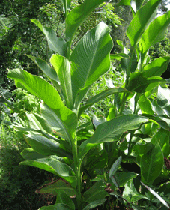
UTCanna edulis No Norfolk Island / TAS / WA Syn. Queensland arrowroot, achira, achera, dong rieng, edible canna, ganyong, sakhu chin zembu, maraca Queensland arrowroot is a very hardy, clump-forming perennial plant with large bright green leaves that are enjoyed by poultry. My chooks manage to pull leaves from so high on the plant I sometimes wonder if they have a ladder hidden away in the chook shed. The edible tubers are a good substitute for potatoes and the leaves make excellent mulch. More information on growing arrowroot... 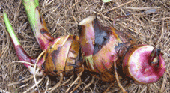 Provided as tubers.
GA100 GA101 GA108 |
|||
 Arrowroot 'Rojo'
UT
Rare
Arrowroot 'Rojo'
UT
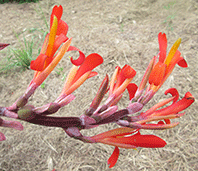
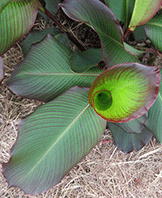
RareCanna edulis 'Rojo' Not to Norfolk Island, TAS or WA A rare form of Queensland arrowroot with large attractive foliage with dark red-edged leaves and veins. The orange-red flowers are small compared to ornamental Canna hybrids. It is a clump-forming perennial plant to 2 m high with an edible tuber. The tuber has a high potassium content and 1 - 3 percent protein; the young leaves and shoots are nutritious and contain 10 percent protein. The leaves can also be cut for mulch and the plant used as a weed barrier, low windbreak or animal fodder. Suitable for all areas. More information on growing arrowroot... Provided as tubers. GA141 GA102 GA152 |
|||
 Chia
OG
Chia
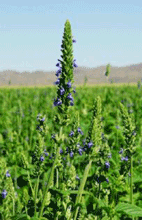
OGSalvia hispanica It is one of the highest sources of Omega 3 and is also rich in protein, calcium, Vitamin C, iron and potassium. This vigorous plant is heat and pest-resistant. The blue flower spikes develop on plants 40 - 80 cm tall. Harvest the ripe seedheads then place in cloth or paper bag and hang upside down to dry. Separate the seeds from the stems and winnow in a light breeze. Store in air tight jar and add to chook food regularly. Does best in subtropical and tropical areas as requires frost-free growing conditions and warm soil to grow. SC504 (approx. 400 seeds per pkt.) SC505 SC506 |
|||
 Chicory 'Puna II'
UT
Chicory 'Puna II'
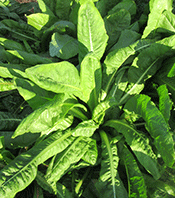
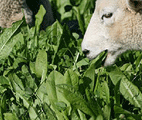
UTCichorium intybus No WA Chicory 'Puna II' is a broadleaf, perennial forage herb providing highly nutritious feed to grazing animals and poultry. It has a thick, deep taproot capable of breaking up compacted soils and cycling nutrients from the subsoil. As an improved pasture it combines well with other grasses and clovers and should be rotationally grazed from spring to late autumn. It is hardy, pest and disease resistant and drought tolerant. Sow early spring in temperate areas. Sow autumn in subtropical areas. Sow April - August in tropical areas. It germinates best at 10 - 21°C soil temperature. Soil should be moderately fertile and well drained; it is tolerant of acid soils pH 5.5 - 6. SC351 No WA SC352 No WA SC433 No WA SC698 No TAS / WA |
|||
 Clucker Tucker™
UT
Clucker Tucker™
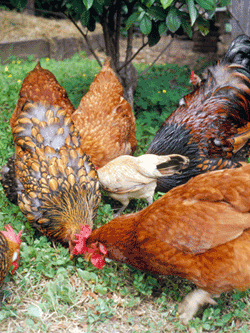
UTNo TAS / WA Clucker Tucker™ is a hardy mix of all-important greens to keep your chooks healthy. May contain barrel medic, bok choy, buckwheat, forage chicory, clover, cocksfoot, lucerne, millet, forage plantain, silverbeet, subclover and sunflower. Most have vigorous root systems that will quickly regrow leaves that are cut or eaten. Clucker Tucker™ is a blend of annual and perennial plants, many of which will self-sow. In a forage area, seed can be broadcast; the chooks will need to be kept off the area for the plants to establish. After they have grazed it down, the chooks should be taken off to allow it to reshoot. Where space is limited, grow it in seedling trays and then place in the chook run or bird cage once grown. In a pasture, used as a 'herbal ley' it is a healthy addition for grazing animals. In temperate areas sow March - May or August - October. In subtropical areas sow August - September or May - July. In tropical areas sow April - August. Broadcast seed 2 - 3 g/m² in a forage area. In a seedling tray use 1 - 2g per seedling tray. SC329 SC330 SC331 More information on poultry forage... |
|||
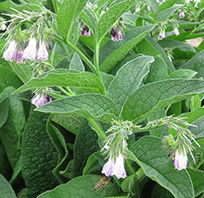 Comfrey
UT
Comfrey
UTSymphytum officinale Syn. boneset. Comfrey is an herbaceous perennial plant widely used as an animal forage, soil improver, bee forage and mulch plant. It has large, hairy leaves and grows in a rosette to 1 metre in height. The mauve flowers are bell-like and borne in clusters. Comfrey rarely flowers in subtropical and tropical areas as there isn't sufficient winter chill to induce flowering. In cold areas it is dormant in winter. It is a hardy plant, with a wide climatic range, from cool temperate to tropical. It provides high yields on fertile, well-watered soil. Comfrey probably has the widest range of uses in a permaculture system of any plant. More info on growing comfrey... Provided as root cuttings. Not to Norfolk Island, NT, TAS or WA GC138 GC139 Provided in mini pots. Not to Norfolk Island, NT, SA, TAS or WA GC103 GC119Save $1.90 |
|||
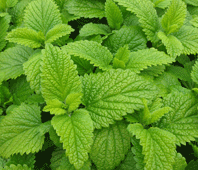 Lemon Balm
UT
Lemon Balm
UTMelissa officinalis Lemon Balm has a range of useful properties that benefit the hens. As a medicinal herb it is antiviral, so may protect against some poultry diseases. It is also antibacterial and highly aromatic, so try cutting a few short stems every day and adding it to your nest boxes. It is also believed to be rodent repellent, which would be great, if it worked. If you happen to be roasting a chook, lemon balm adds a lovely flavour. Lemon balm is an herbaceous perennial with a delicate lemon scent. It is a non-running member of the mint family. It attracts bees and butterflies. Sow seed in spring; in a cool, semi-shaded position. Suitable for temperate and subtropical areas; unlikely to do well in the tropics. More information on herbs... Provided as seed SL181 (approx. 100 seeds per pkt.) SL201 Provided as tubestock Not to Norfolk Island, NT, SA, TAS or WA GL112(1 tubestock) GL120(3 tubestock) Save $2.85 |
|||
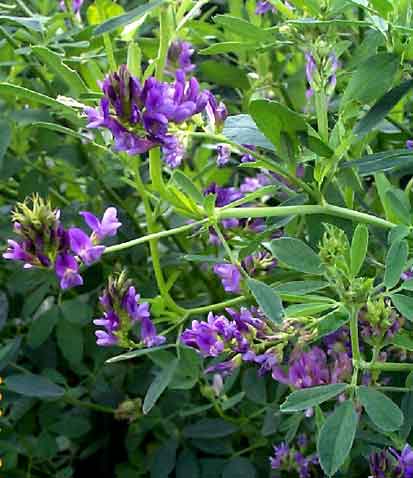 Lucerne 'Sequel'
UT
Lucerne 'Sequel'
UTNo WA Medicago sativa Syn. Alfalfa Lucerne is a valuable plant for poultry forage, providing nutritious, protein-rich leaves containing minerals and vitamins A, D, K and E. It is high in chlorophyll, which makes it a valuable antioxidant. It is a hardy perennial lasting many years. 'Sequel' is a bushy upright, winter vigorous, legume with a deep taproot. It is attractive to beneficial insects and bees, can be cut for mulch and is a great animal forage. In temperate areas sow March-May or August-October; in subtropical areas sow May-July. SL118 I No WA SL119 I No TAS / WA More information on living mulches... |
|||
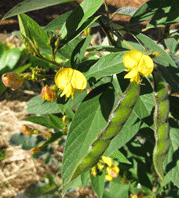
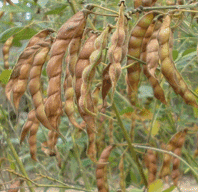 Pigeon Pea
H
UT
Pigeon Pea
H
UTCajanus cajan Pigeon Pea is an excellent chicken forage for warmer areas, providing high protein seeds, edible leafy greens and shelter. It is a perennial, nitrogen-fixing, drought tolerant shrub to 2 - 3 m. It is also useful for on-site mulch production and is an excellent animal forage. It is an important food plant in India; the seeds are 25% protein and can be eaten fresh or as split dried peas. The dried seeds are used for dhal in India and contain 5 times more Vitamin A and C than green peas. The leaves and young shoots can be eaten cooked, they are fibrous and have a strong spicy odour. Sow spring and summer into warm soil; autumn in frost-free areas only. Suitable for (warm) temperate, subtropical and tropical areas. More information on pigeon pea... Provided as seed SP123 (approx. 60 seeds per pkt.) I SP351 (approx. 125+ seeds per pkt.) I SP124 (approx. 500+ seeds per pkt.) I SP339 (approx. 1250+ seeds per pkt.) I SP244 (approx. 5000+ seeds per pkt.) I Provided as tubestock Not to Norfolk Island, NT, SA, TAS or WA GP150 GP151Save $1.90 |
|||
|
I
means that inoculant is included with the seed purchase.
Unsure how to use inoculant or its purpose? Find information about inoculant here. |
|||
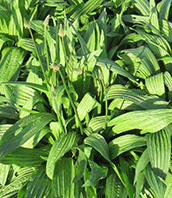 Plantain 'Tonic'
UT
Plantain 'Tonic'
UTPlantago lanceolata syn. Ribwort, Narrow-leaf Plantain Plantain 'Tonic' is a broadleaf, short-lived, perennial forage herb with a deep tap root. Young leaves were traditionally harvested in Europe as a fresh edible green in spring. It is attractive to butterflies. It provides highly nutritious feed to grazing animals and poultry, mainly in summer. It is high in protein (23%) and minerals, particularly calcium and selenium. It is tolerant to a wide range of soils and establishes quickly. As an improved pasture it is best combined with other grasses and clovers. It is hardy, pest and disease resistant and drought tolerant. It is 90 cm tall when in flower. Sow autumn in temperate and subtropical areas. Sow April - August in tropical areas. It germinates best at 10 - 21°C soil temp. Soil should be moderately fertile and well drained; it is tolerant of acid soils pH 5.5 - 7. Broadcast the seed, 25g will cover 50m². SP238 SP239 SP249 |
|||
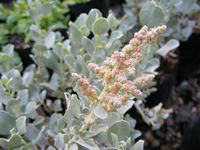 Saltbush - Old Man
 UT
UTAtriplex nummularia Saltbush is a native, sprawling evergreen shrub growing 3 x 3 m. The plant is tall and densely branched with grey leaves and inconspicuous flowers. It is suitable for arid areas and is highly drought resistant and salt tolerant. The young, tender leaves are edible and can be used in a range of ways in the kitchen if the plants are grown in good conditions. It is a useful fodder eaten readily by sheep and cattle. In arid, inland areas it can be used as an ornamental fire-retardant hedge around gardens. It prefers a well-drained alkaline clay soil in full sun, it is unlikely to do well in humid regions. It does best in areas with an average annual rainfall between 300 - 600 mm. Sow in autumn for young plants to be ready for spring planting. Seed germination is a low % and slow, taking approx. 21 days. Provided as seed SS278 (approx. 35 seeds per pkt.) SS279 Provided as tubestock. Not to Norfolk Island, NT, SA, TAS or WA GS184 GS185Save $1.90 |
|||
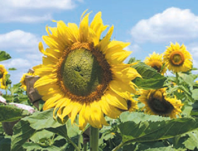
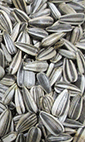 Sunflower 'Sunbird'
OG
Sunflower 'Sunbird'
OGHelianthus annuus Sunbird produces large grey sunflower seeds which are excellent as human food or poultry forage. The flowers add joy to a summer garden, attract colourful king parrots and the flower petals are edible. The tall plants provide support for climbing beans and are useful as a summer windbreak. Sunflowers are a must for a child's garden, the sheer size of the plants and the way the flowers follow the sun are intriguing for kids. Sunbird is both drought tolerant and disease resistant. The plants grow 2 - 2.5m tall. SS200 (approx. 50 seeds per pkt.) SS207 SS199 SS249 No TAS SS250 No TAS |
|||
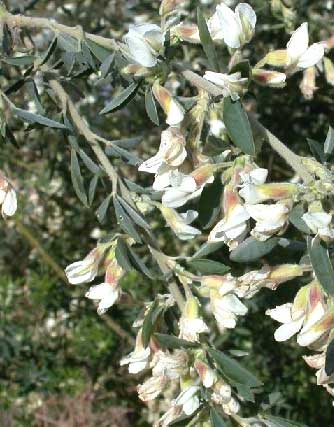 Tagasaste
UT
Tagasaste
UTChamaecytisus proliferus syn. Tree Lucerne Tree Lucerne is a very useful chicken forage for Mediterranean (dry summer) areas. It is useful in the chook run to provide shade, shelter, leafy greens and high protein seeds. The flowers are considered a tonic for poultry. It is a shrubby, frost and drought tolerant small tree to 5 m, with fragrant white flowers. It is useful for windbreaks and fire retardant hedges; salt and wind tolerant. It is an excellent high protein animal forage. Sow spring and summer. Suitable for temperate areas only. More information on tree lucerne... Provided as seed ST100 (approx. 45 seeds per pkt.) I ST101 (approx. 1100 seeds per pkt.) I ST131I ST249I ST246I Provided as tubestock Not to Norfolk Island, NT, SA, TAS or WA GT108 (1 tubestock) GT110 (3 tubestock) Save $2.85 |
|||
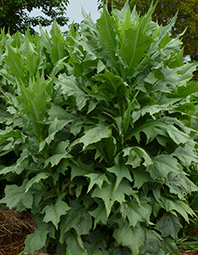 Timor Lettuce
H
UT
Timor Lettuce
H
UTLactuca indica Syn. Indian Lettuce Timor Lettuce is a close relative of lettuce but grows faster, taller and is hardier to hot temperatures and high humidity. It will grow across a wide climate range from cooler areas to the tropics. It is a fast-growing, upright leafy green that can grow as high as 2 m. It has a semi-perennial habit and can be cut back after flowering to re-shoot. It will grow in full sun but plants grown in partial shade will produce larger, more tender leaves. Very young, tender leaves are eaten raw in salads, older leaves can be cooked like spinach. The leaves have a somewhat bitter flavour, closer to chicory than lettuce. It is also used in traditional medicine. It self-sows readily and care should be taken to avoid weediness. A useful plant for poultry forage systems. Provided as seed. Not to WA ST240 (approx. 100 seeds per pkt.) Provided as mini pots. Not to Norfolk Island, NT, SA, TAS or WA GT100 GT102Save $1.90 |
|||
Other useful forage plants for chickens can be found here:
|
|||

|
Green Harvest specialises in seeds which are:
|

 Home
Home
Green Harvest Organic Gardening Supplies is permanently closed as of 5pm on 1-11-2023.
We will not be taking orders by this website, in person, by phone or email. Our display garden and retail shop are closed forever.
Read more...
Phone:07 54357000
Phone calls will only be responded to sporadically and only in reference to orders placed prior to 2-11-2023. All the useful growing and organic pest management research and resources are available on this website for a while still.
We guarantee our seeds to the value of the purchase price. We are happy to replace the seeds, give you a credit or refund, whichever you prefer. Other than our guarantee to the extent of the purchase price Green Harvest gives no other warranty expressed or implied. No liability will be accepted by Green Harvest, its owners or employees as to the accuracy of any information. No responsibility will be taken for damage to property or persons due to information given about a product or technique. No responsibility will be taken for the loss of a crop or income due to information given about a product or technique.
 Shopping here is private and secure.
Copyright © 2001 - 2024 Green Harvest Organic Gardening Supplies
No part of this website may be reproduced without permission of the owner